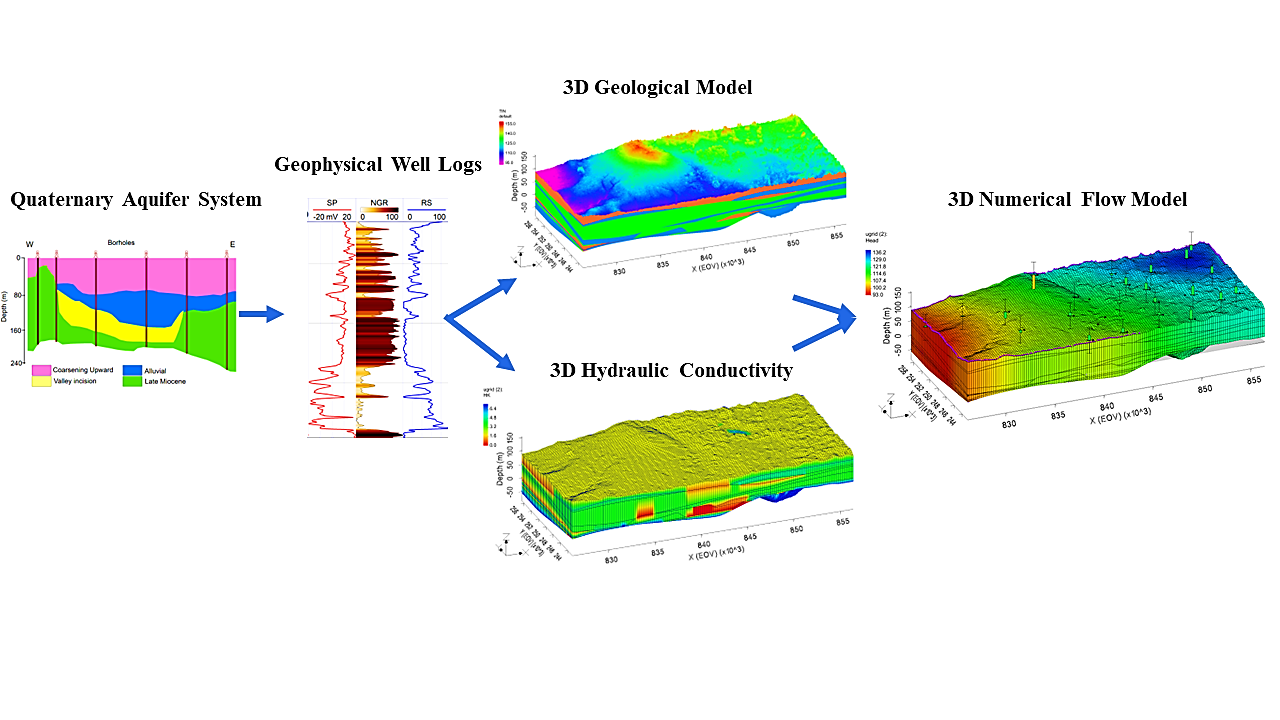
As part of the Sustainable Development and Technologies Program, this work addresses the challenge of managing groundwater resources in areas where detailed geological information is scarce. Without sufficient data about underground rock formations and water flow patterns, it becomes difficult to make informed decisions about water resource planning and sustainability.
This study presents an innovative solution to this problem by utilizing geophysical measurements from wells to understand and predict groundwater behavior. The research applies advanced analytical methods, including the Csókás method—developed by Professor János Csókás, former head of the Geophysical Department at the University of Miskolc—along with modern machine learning techniques to create reliable groundwater flow models even when traditional data is limited.
The results demonstrate that this approach can successfully map underground water systems and support sustainable water management decisions in regions with complex geology and limited available information.
Tovább a cikkhez: sciencedirect.com