

Understanding the interactions within the soil–plant–water system is essential for effective water and nutrient management, maximizing crop yields, enhancing biodiversity, and evaluating environmental impacts.
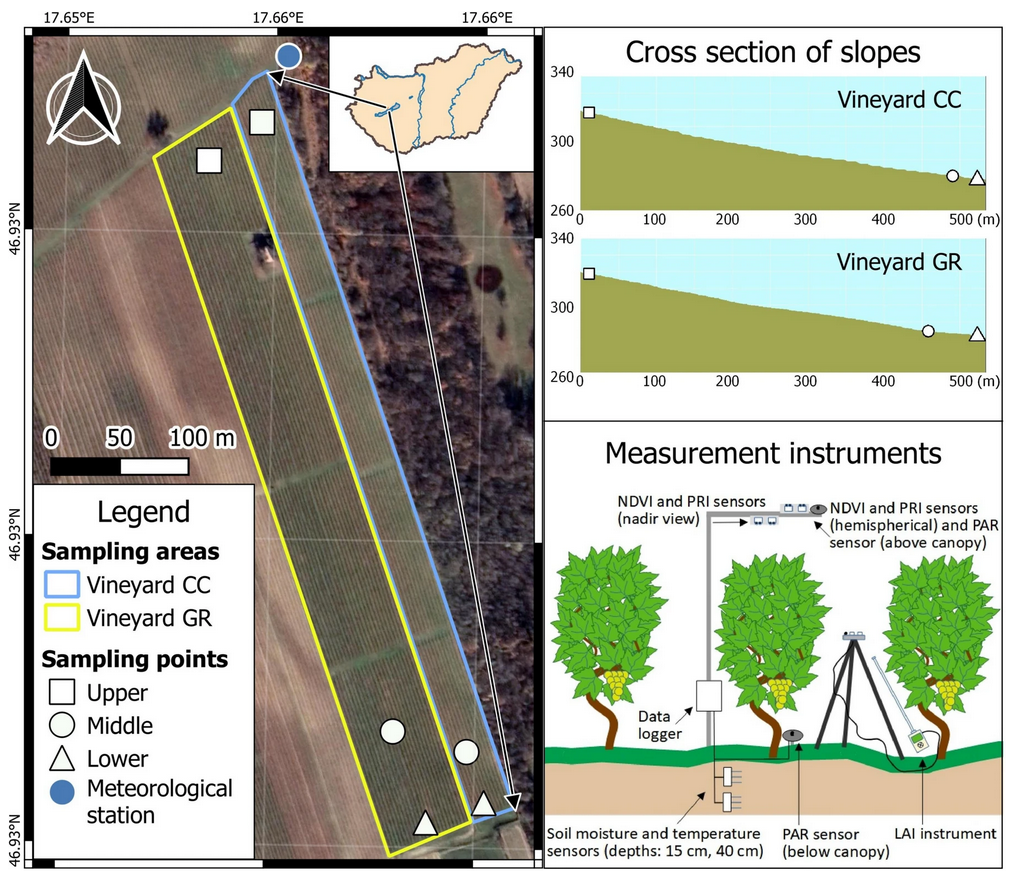
Researchers from the HUN-REN ATK Institute for Soil Science studied how changing tillage practices to cover cropping affected soil moisture variation in a vineyard located in the Balaton Uplands. The study spanned three years and included two vineyard treatments. In the first treatment, tillage was used in the first year, followed by the introduction of cover crops in the second year, and continued cover cropping without further tillage in the third year, allowing cover crops to regrow naturally. The second treatment, serving as a control, involved permanent grass cover with no tillage. Alongside soil moisture monitoring, the researchers also conducted plant and soil physical and chemical analyses.
The results revealed distinct differences between the inter-row treatments. Soil moisture content was significantly higher at both 15 cm and 40 cm depths in the tillage to cover-cropped site compared to the grass-covered site. Plant traits showed a moderate correlation with soil properties such as total nitrogen, pH, and soil water content. Although continuous cover cropping in the third year led to reduced soil moisture content in the upper soil layers, it had a positive effect on plant development.
Tovább a cikkhez: Plant Soil